
 +91 92118 40803
 What Makes Char Dham Yatra in India So Special?

The Char Dham Yatra in India is more than a pilgrimage. For many, it’s a discovery of inner peace and self-discovery. Each year, worshippers make the long journey through the stunning Uttarkhand mountains to the four pilgrimage sites of Yamunotri, Gangotri, Kedarnath and Badrinath.
These sites make up the Chota Char Dham of Uttarakhand. Each site is rich with history, an individual temple, a unique story, and a prominent place in Hinduism.
The beauty of this journey is not just the pilgrimage itself, but the scenery that fills the journey. Rivers can be seen flowing, mountains and valleys come into view, and ancient temples can be found scattered throughout villages on the hills. The road is not always accommodating but every difficulty is met with faith and devotion.
The history of the temples is deep, as stories intertwining the sacred rivers, gods, and sages have been meditated upon in these peaceful mountains for many generations. For this reason, the Char Dham Yatra is a pilgrimage that is sought after year after year.
Char Dham Yatra Explained
The Char Dham Yatra in India is primarily the journey to the four important temples of:
- Yamunotri Dham,
- Gangotri Dham,
- Kedarnath Dham, and
- Badrinath Dham
all of which are located within the Garhwal Range of the Himalayas in Uttarkhand.
Typically the route is taken in the order of Yamunotri → Gangotri → Kedarnath → Badrinath.
While many people refer to this journey as “Char Dham Yatra,” we can differentiate it as Uttarakhand Char Dham Yatra or Chota Char Dham Yatra. This is in contrast to the larger, traditional Char Dham circuit of India, which encompasses Badrinath, Dwarka, Puri, and Rameswaram.
Yamunotri, Gangotri, Kedarnath, and Badrinath are the four locations that most people have in mind when they request a Char Dham trip in Uttarakhand.
The Char Dham Yatra has its roots in the ancient religious customs that the Himalayan region embraced.
It is well known that the mountains of Uttarakhand have, over the years, become a region of worship and meditation. The customs and traditions of the Hindus describe the mountains as a divine region and the place where saints and sages came to perform their meditation.
Numerous temples of the region were constructed, restored or improved upon during different periods of time. The different, and at times contradictory, accounts of the temples are the result of historical documentation, oral traditions, and myth.
Badrinath is known to be one of the regions where the great philosopher and spiritual teacher, Adi Shankaracharya, revived the pilgrimage traditions of India.
The Char Dham Yatra of today is a marked difference from that of previous years. Today, there are a myriad of services that make the journey convenient such as roads, lodging, and various modes of transportation including, taxis, buses and even helicopters. In years past, the shrines of the mountains of the Himalaya could only be reached after long and arduous journeys.
That difference makes the journey even more interesting. While the locations of the pilgrimages have changed over the years, the devotion and faith have not faded.
1. Yamunotri Dham – The Starting Point of the Holy Journey
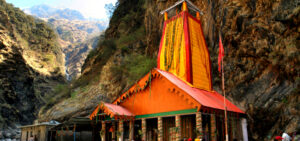
Yamunotri is the first of the Char Dham Yatra, and is dedicated to the Goddess Yamuna.
Located in the district of Uttarkashi, the shrine is established amidst the beauty of the Himalayan mountains. Hindus believe the river Yamuna to be sacred. As a result, many Hindus visit this temple to offer prayers and to receive the divine blessings.
The Legend of Yamunotri
According to mythology, Goddess Yamuna is the daughter of Surya, the Sun God, and is a river Goddess. She is highly reverend and worshipped.
There are many legends of the region which speak of the ancient Sages and their secrets. The Natural hot water springs and the mountains add uniqueness to this pilgrimage.
Yamunotri is the only pilgrimage site which has the hot water springs surrounding the temple, and devotees have used these hot water springs for religious purposes.
How Is the Journey to Yamunotri
The road ends at Janki Chatti, which is the point where the pilgrimage of Yamunotri begins.
The walk is a long and tiring journey for those who are not accustomed to trekking. Donkeys, palkis and other means of support are provided at the cost of local arrangements.
For many pilgrims, this journey is fulfilling and of emotional value as they strive all the way to the temple.
2. Gangotri Dham – The Sacred River Ganga
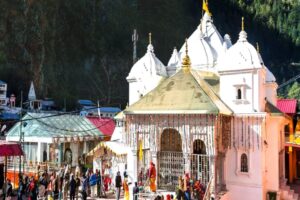
After Yamunotri, the next customary stop for pilgrims is Gangotri Dham.
Gangotri hosts one of the most sacred sites of the River Ganga, which is home to the temple that rests in the uplifting Mountains of the Uttarkashi district and the Bhagirathi River.
The Story of Goddess Ganga
One of the more popular tales of Gangotri is the story of Goddess Ganga’s journey from the heavens to Earth.
In Hindu mythology, King Bhagiratha did severe penance to invite Ganga to Earth. Ganga, with the strength of a large and powerful river, would have destroyed everything in her path, so Lord Shiva caught her in his jata (matted hair) and let her flow to the Earth in a gentle manner.
This tale also is the origin of the name of the river Gangotri, which is also referred to as Bhagirathi.
The story of Bhagiratha is one of the many reasons the River Ganga is held in such great esteem and is much more than a river to the people of the Hindu faith. She embodies purity, devotion, and the act of spiritual cleansing.
What Makes Gangotri Special?
Gangotri is a memorable stop on the pilgrimage for the glorious view in the majestic mountains that surround the temple, and calm the soothing sounds of the river.
Travelers have the opportunity to visit the temple and the surrounding area, given the local travel restrictions and weather.
For many pilgrims, the moments spent sitting by the river and taking in the views of the magnificent and ancient mountains is the most serene of all on the journey.
3. Kedarnath Dham – Lord Shiva’s Sacred Dham
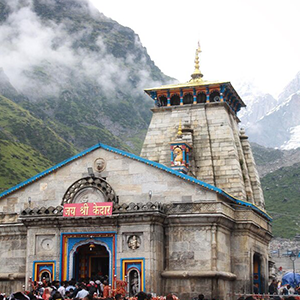
Kedarnath is one of the most well-known and most difficult Dham places in the entire Char Dham Yatra.
Kedarnath is also known as a Dham in honor of Lord Shiva and is one of his 12 Jyotirlingas. Since it is located in the Rudraprayag district, it is one of the most revered places to worship Lord Shiva.
Kedarnath’s Historical Mythology
Kedarnath has a special place in connection with the Pandavas of the Mahabharata.
After the infamous Kurukshetra war, it is said that the Pandavas wanted to meet Lord Shiva to receive his blessings. To avoid meeting the Pandavas, Lord Shiva is said to have taken the form of a bull.
In the end, the Pandavas were able to identify Lord Shiva and as per the myth, the different parts of Lord Shiva are said to have manifested in different places and formed some of the most significant sacred places of worship, one of which is Kedarnath.
The temple of Kedarnath is set in a gorge of the great Himalayas and one can only see its beauty and grandeur in the surrounding mountain ranges.
What Makes Kedarnath Special?
The Kedarnath Temple pilgrimage is a journey unlike any other.
With multiple challenges like long, arduous treks, Kedarnath draws pilgrims who are prepared to accept and appreciate the travel challenges so that they are rewarded with the journey’s patience and determination.
When in the mountainous presence of the old temple, the physicality and challenges of reaching the temple are forgotten.
4.Badrinath marks the end of the Uttarakhand Char Dham Yatra.
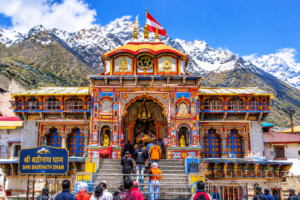
It is found in the Chamoli district. Badrinarayan is a name for Lord Vishnu in Badrinath.
The Temple is situated by the Alaknanda River among scenic mountain ranges.
Background of Badrinath
According to the Hindu tradition, it is believed that Lord Vishnu meditated at this place.
One of the many stories is that the Badri berry trees (also known as the Badri tree) were formed to shield Lord Vishnu during his meditation. This name is associated with Badrinath.
The region is attributed to sages, meditation and spirituality for a long time.
The association of Badrinath with Adi Shankaracharya is of great significance. He is said to have revived the temple and made it popular as a pilgrimage site.
What attracts the pilgrims to Badrinath?
Badrinath combines spirituality and stunning scenery.
The many valleys of the Himalayas are traveled by many and then Badrinath is the site that signifies the end of a long and arduous journey of the spirit.
When time and the elements allow, many pilgrims visit other holy sites and natural wonders nearby.
What is the Order of the Traditional Char Dham Yatra?
The order of the Yatra is usually:
Yamunotri → Gangotri → Kedarnath → Badrinath
The journey typically starts and ends in:
Haridwar/Rishikesh → Barkot → Yamunotri → Uttarkashi → Gangotri → Guptkashi/Sitapur → Kedarnath → Joshimath → Badrinath
Accommodations, road conditions and weather along the journey may influence the way it is traveled.
The journey involves more than visiting some temples. There are lots of towns, forests, rivers, and mountain roads that you will pass on the way.
That is why a lot of travelers say that the journey is as memorable as visiting the temples.
How Many Days are Needed for Char Dham Yatra?
A full Char Dham Yatra in India trip to the four dhams in Uttarakhand generally takes 10 to 14 days. This can vary.
Travel time will depend on:
- Place of departure
- Mode of transportation
- Number and length of rest days
- Conditions of weather and road
- Number of temples to be visited
- Speed of trekking
- Any other sightseeing
Do not plan an overly strict itinerary. Travel in the mountains can take longer than anticipated, but if you add a day or two of flexibility, the journey can be made much more comfortable.
What is the Best Time for Char Dham Yatra in India?
During the winter, travel to the Char Dham Temples becomes virtually impossible due to heavy snowfall in the Himalayas.
The best time of year for the pilgrimage is the warmer months.
Summer
Summer is a popular time to go because the weather is more predictable and travelers are not as likely to encounter road issues, but this also the peak season for the pilgrimage.
Monsoon
Traveling during the Monsoon season is much more difficult and comes with a much greater risk due to the increased likelihood of road blockages and delays from landslides.
If you do travel during the Monsoon season, be sure to check travel advisories often and pay close attention to the weather.
Autumn
The weather and mountain scenery are nice during the post-monsoon months, but pilgrims need to look at the official temple timings before scheduling their trips.
Char Dham Yatra Difficulty
Every dham has its own difficulty.
Yamunotri: Requires a large walk from the closest point on the road.
Gangotri: Is easier because of better road access.
Kedarnath: Requires the most effort for high altitude trekking.
Badrinath: Also has road access, but can be exhausting from high altitude and mountain travel.
Everyone should attempt the Char Dham Yatra, not just trekkers, but you need some physical fitness.
Char Dham Yatra Preparation Tips
I highly recommend preparing for the Char Dham Yatra to avoid any hardship.
Weather Packing
Preparation for changes in weather, especially in the Himalayas, should be done by bringing warm clothes, layers, and rain protection.
Comfortable Shoe Selection
You will value comfortable shoes highly during the long walks in Yamunotri and Kedarnath.
Personalized Medic Packing
Bring your regular medicines along with a personal first-aid kit.
Sufficient Hydration
Adequately hydrated is a must for the travels and walks.
Avoiding Packing Excess
Traveling to many destinations will be easier with a small bag.
Important Documents Packing
ID, insurance, and necessary paperwork should all be kept in a safe place.
Available Transportation Options
Transportation methods for completing the pilgrimage are numerous.
Road Travel
The most popular method of travel is by road. Pilgrims use buses, shared vehicles, taxis, and private cars.
Helicopter Services
Helicopter services depend on the weather, government orders, and availability. Pilgrims can use helicopter services for some sections of the route, especially for Kedarnath.
While more expensive, the use of Helicopter services will save significant time.
Trekking
The segment to Yamunotri requires trekking. Like many other pilgrims, the segment to Kedarnath also requires trekking, which many consider an important part of the pilgrimage despite the exhaustion involved.
How Much Does Char Dham Yatra Cost?
The pilgrimage has no fixed cost because each traveler’s preferences customize the final cost.
The total cost for the Char Dham Yatra will depend on:
- Days of travel
- Place of departure
- Class of lodgings
- Mode of travel
- Size of travel group
- Meals
- Local travel
- Tours
- Helicopter transport
- Time of year
For budget travelers, shared modes of transport and basic lodging are available, while those preferring family travel can use private transport and book better class lodging.
Always check what the Char Dham package includes when you book, so you can avoid unexpected costs.
Is Char Dham Yatra Suitable for Senior Citizens?
With proper planning, pilgrims of any age can participate in Char Dham.
The route to Kedarnath and Yamunotri has tricky terrain and high altitude. Therefore, the climb becomes more challenging as you go higher. So, prepare properly before you travel.
This travel is not for the impatient, so senior travel should be pre approved based on health.
Making travel easy and changing the pace of travel with planned breaks will be helpful.
Char Dham Yatra vs. Your Average Holiday
Unlike a normal holiday (where most sit-back-and-relax) a pilgrimage means a change in pace, usually accompanied by an abundance of travel and movement.
This holds particularly true for the Char Dham Yatra in India, because the journey itself forms a core part of the pilgrimage.
During the Char Dham Yatra, expect to wake at the crack of dawn, travel for hours through the mountains, walk for miles, stand in long queues at the temples, listen to the prayers on loop, and spend ample time in long-established sacred spaces.
That’s not to say a pilgrimage is always easy. You can expect delays, exhaustion and mountain traffic, but your pilgrimage can offer you a level of peace and quiet that a holiday just won’t give you.
This, right here, is why devotees choose the Char Dham Yatra as their pilgrimage of choice.
Tips for Your Char Dham Yatra
Some of the most useful tips for your Char Dham Yatra are simple:
- Prepare for your trip in advance.
- Make note of the present road and weather conditions.
- Finish the trip form.
- Make all your lodging and travel arrangements well in advance during the busy season.
- Bring some comfortable walking shoes.
- Dress with layers.
- Bring some luggage that is travel friendly.
- Remember to stay hydrated.
- Take breaks.
- Follow the rules of the temples that you visit.
- Keep the place clean.
- Bring yours emergency numbers.
- Avoid speeding.bearing pace, planning to stop at each destination.
Above all, patience is key. Expect the mountain roads to take the journey as it pleases.
Char Dham Yatra in India FAQs
1.What are the 4 Dham Yatra places?
The four sites of the Char Dham Yatra in India are Yamunotri, Gangotri, Kedarnath and Badrinath.
2.What is the correct order of Char Dham Yatra?
The order of the Char Dham Yatra is Yamunotri, Gangotri, Kedarnath, Badrinath.
3.What Dham is for Lord Shiva?
Kedarnath Dham is for Lord Shiva, and it is one of the twelve Jyotirlingas.
4.What Dham is for Lord Vishnu?
Badrinath Dham is for Lord Vishnu.
5.What is the story of Gangotri?
Goddess Ganga descended to earth at Gangotri because of King Bhagiratha’s intense penance. After that, Lord Shiva took the first step to control her powerful flow.
6. Why is Yamunotri famous?
People dedicate Yamunotri to Goddess Yamuna. In addition, it holds the source of the Yamuna River and also offers natural hot springs.
7.Why is Kedarnath so famous?
Kedarnath is perhaps the most famous of India’s Shiva shrines. Its location is legendary. Its temple is ancient and its altitude is high, all of which add to its importance in Hindu mythology.
8. How many days are enough for Char Dham Yatra?
depending on the road and mode of transport and considering weather and rest, the yatra takes approximately 10 to 14 days.
9.How to Pack for Char Dham Yatra
Take personal medicines and toiletries. Carry a comfortable pair of shoes, extra clothes, identification, charger, a first aid kit, water bottle, and toiletries.
10.Is Char Dham Yatra difficult?
Some sections are physically demanding, especially Yamunotri and Kedarnath. However, with proper preparation, a realistic itinerary and adequate rest, many pilgrims complete the journey comfortably.
Final Thoughts
The Char Dham Yatra in India is much more than a trip to four temples. It is a journey through faith, history, mythology and the beauty of the Himalayas.
From the sacred waters of Yamunotri and the story of Goddess Ganga at Gangotri to the powerful presence of Lord Shiva at Kedarnath and the peaceful atmosphere of Badrinath, every dham has something unique to offer.
The journey may be tiring at times, but that is also what makes it memorable. You are not simply traveling from one destination to another—you are following a pilgrimage route that generations of devotees have walked before you.
With proper planning, comfortable travel arrangements and respect for the local culture and environment, your Char Dham journey can become one of the most meaningful travel experiences of your life.
Plan Your Char Dham Yatra with Star India Tours
Char Dham Yatra includes sacred journeys to Yamunotri, Gangotri, Kedarnath and Badrinath. Let’s go on this pilgrimage with Star India Tours and help you commemorate the tradition of Indian spiritualism.
Travel bookings and accommodation arrangements in the best facilities are just a call away. Now take the smoothest trips on pilgrimage trails.
Start the plan today and book your Char Dham Yatra with Star India Tours to rekindle your faith and devotion.
Need help planning your Char Dham Yatra? Call Star India Tours now to book your trip!