

 +91 92118 40803
How a North India Tour Package Can Balance Mountains, Culture, and Spiritual Travel
KEY POINTS:
- Balance mountain, cultural, and spiritual experiences in one route.
- Keep travel days realistic for hill regions.
- Use logical destination sequencing to reduce long transfers.
- Mix busy sightseeing with slower leisure days.
- Choose transport based on distance and terrain.
- Allow extra time for mountain roads and weather.
- Combine heritage cities with scenic hill stations.
- Include spiritual stops without overcrowding the schedule.
- Select hotels that support the travel route.
- Keep free time for local markets and relaxed exploration.
- Match activities to families, couples, and senior travellers.
- Use a flexible itinerary for a smoother North India journey.
North India gives travellers something unusual: mountain scenery, centuries of history, active cities, pilgrimage centres, rivers, temples, old markets, and quiet hill towns can all be part of the same journey. The challenge is fitting those experiences together without making the holiday feel rushed. A carefully planned North India tour package can balance these different sides by grouping destinations sensibly, allowing enough time for long road journeys, and mixing busy sightseeing days with slower mountain or spiritual stops.
A traveller might begin among Delhi’s historic landmarks, continue towards Himachal’s cooler valleys, and later spend time beside the Ganges in Uttarakhand. Each place offers a different mood, so the itinerary should change with it rather than follow the same daily routine everywhere. Good planning is less about adding more locations and more about choosing experiences that complement each other.
In this blog, we will look at how mountains, culture, spirituality, transport, local experiences, and sensible pacing can come together in one rewarding North India journey.
Mountains Bring Natural Contrast
Mountain destinations give a multi-stop holiday a completely different pace. After exploring monuments, markets, and busy city streets, arriving in Shimla, Manali, Mussoorie, or Nainital can feel like a natural pause. Cooler air, forest roads, valleys, lakes, and open views create space for quieter days.
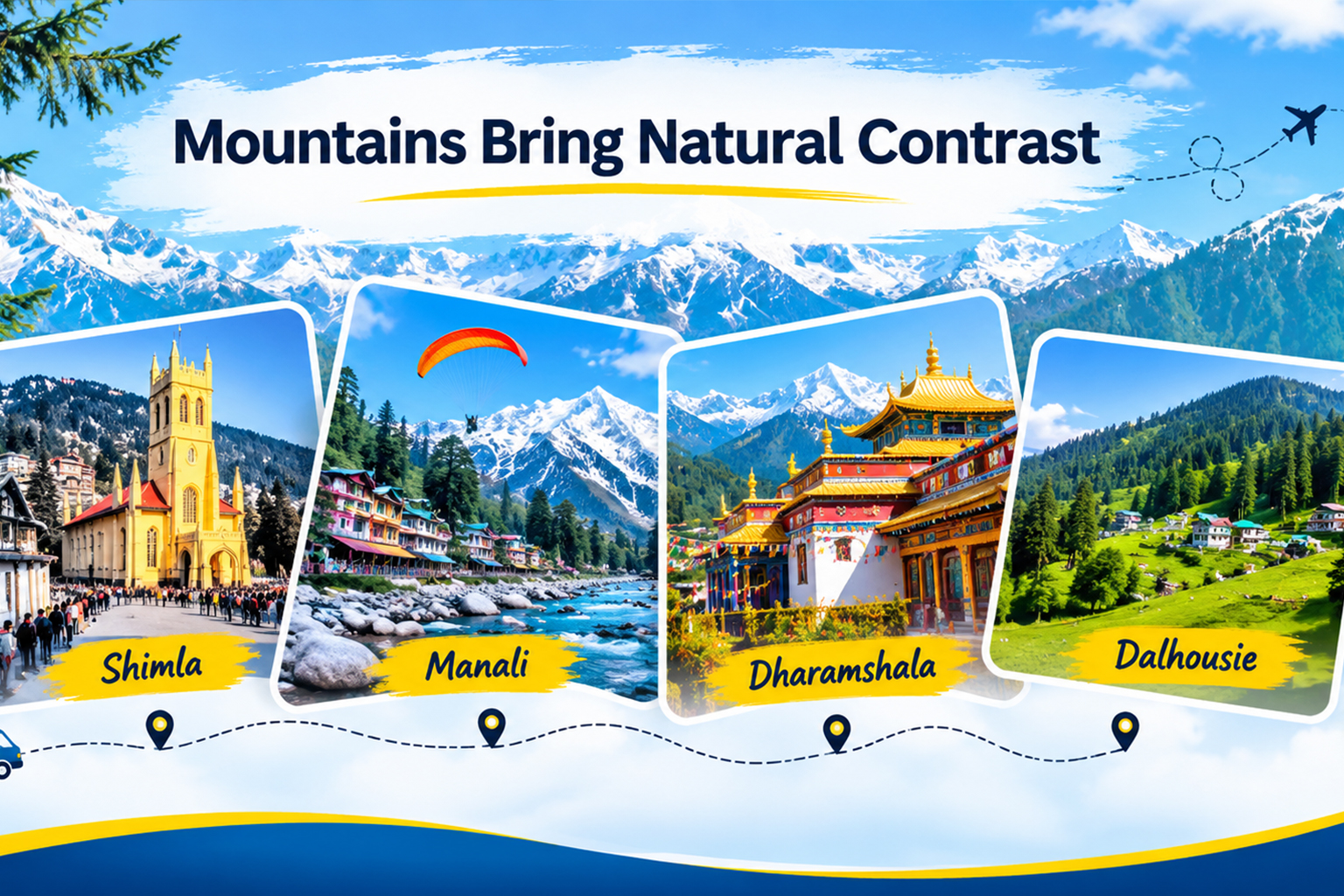
The mistake is treating every Himalayan stop as interchangeable. Shimla has colonial architecture, pedestrian areas, and nearby Kufri, while Manali combines the Beas Valley with temples, local markets, and access to outdoor activities. Dharamshala offers yet another character through Tibetan culture and its spiritual atmosphere.
A Himachal tour and travel package can be useful when visitors want several of these places in one route. A typical journey may connect Shimla, Manali, Dharamshala, and Dalhousie, but the driving hours between them need to be respected.
Star India Tours’ published Himachal itineraries, for example, connect Shimla with Manali and include stops such as Kullu Valley, temples, local sightseeing, Dharamshala, and Dalhousie. The routes show why mountain holidays need realistic transfer days rather than packed sightseeing from morning to night.
Useful mountain planning should leave room for:
- Longer road journeys through hilly terrain
- Weather-related changes
- Leisure after demanding transfers
- Local walks and markets
- Optional outdoor activities
That breathing space keeps the scenery enjoyable rather than turning every hill station into another rushed stop.
Culture Needs Time to Settle
North India’s cultural appeal is not limited to famous monuments. It appears in architecture, food, crafts, neighbourhoods, religious traditions, local languages, and even the way one city feels different from the next.
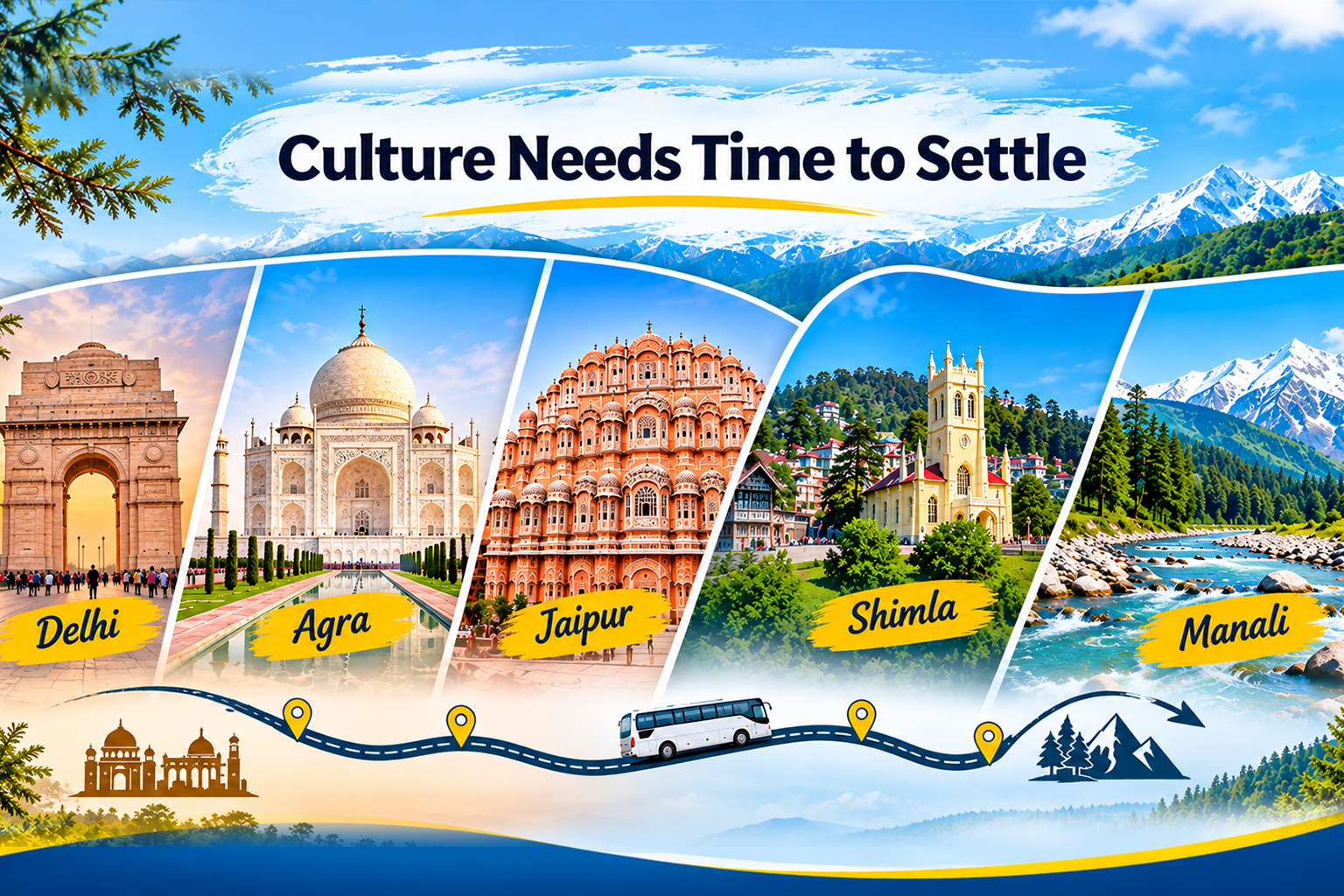
Delhi can introduce travellers to Mughal landmarks, historic neighbourhoods, and modern urban life. Agra adds Mughal heritage through the Taj Mahal and Agra Fort, while Jaipur brings Rajput architecture, palace complexes, traditional bazaars, and a different regional identity.
Combining these places with the Himalayas creates a useful contrast. A traveller could spend several days exploring Delhi, Agra, and Jaipur before heading north towards Shimla and Manali. The shift from forts and old cities to forested hills makes the journey feel varied without being disconnected.
Existing regional itineraries show that this approach is practical. Golden Triangle and Himachal combinations can link Delhi, Agra, Jaipur, Shimla, and Manali within one longer route, blending major heritage sites with mountain stays.
Cultural travel also benefits from unhurried scheduling. Two hours at a major monument may look sufficient on paper, but visitors still need time for travel, entry procedures, local explanation, photographs, and occasional breaks.
A good North India tour package therefore treats culture as something to experience, not simply a list of attractions to tick off.
Spiritual Stops Add Depth
Spiritual travel brings another layer to a northern itinerary. Some visitors travel mainly for pilgrimage, while others simply want to understand the traditions that have shaped the region. Both types of travellers can benefit when sacred destinations are placed naturally within the route.
Uttarakhand is especially suited to this balance. Haridwar and Rishikesh combine riverfront experiences, temples, yoga traditions, and spiritual gatherings with easy access to the Himalayan foothills. Nainital and Mussoorie offer a different setting through lakes, hills, and leisure travel.
A well-structured Uttarakhand tour package can therefore connect nature with quieter cultural experiences. For instance, a traveller might spend time beside Naini Lake, continue through hill country, and later experience the evening Ganga Aarti in Haridwar or the spiritual atmosphere of Rishikesh.
Current Uttarakhand itineraries on the brand’s site combine places such as Nainital, Mussoorie, Haridwar, and Rishikesh, showing how hill travel and spiritual experiences can sit comfortably within the same regional journey.
Spiritual stops also change the rhythm of a holiday. After several days of forts, shopping streets, and long drives, an evening beside a river or a quieter morning at a temple can offer a welcome change.
The key is not to overload these days. Sacred places often deserve time to observe, walk, and absorb the setting rather than arriving only for a photograph.
How Should Days Be Balanced?
The easiest way to spoil a varied itinerary is to make every day equally busy. Mountain travel, heritage sightseeing, temple visits, and outdoor excursions require different levels of energy. A balanced plan alternates them.
After a long drive from Shimla to Manali, for example, travellers may benefit from a relaxed evening instead of immediately starting a full sightseeing programme. The following morning can then include local places such as Hadimba Devi Temple, Vashisht, or nearby markets at a more comfortable pace.
The same principle applies after an intensive city day. If Delhi includes several monuments and busy road transfers, the next stage should not begin before sunrise unless there is a clear reason.
For many travellers, the best North India tour packages work because they recognise that free time has value. An empty evening is not wasted space in an itinerary. It can be used for local dining, shopping, a quiet walk, or simply resting before the next destination.
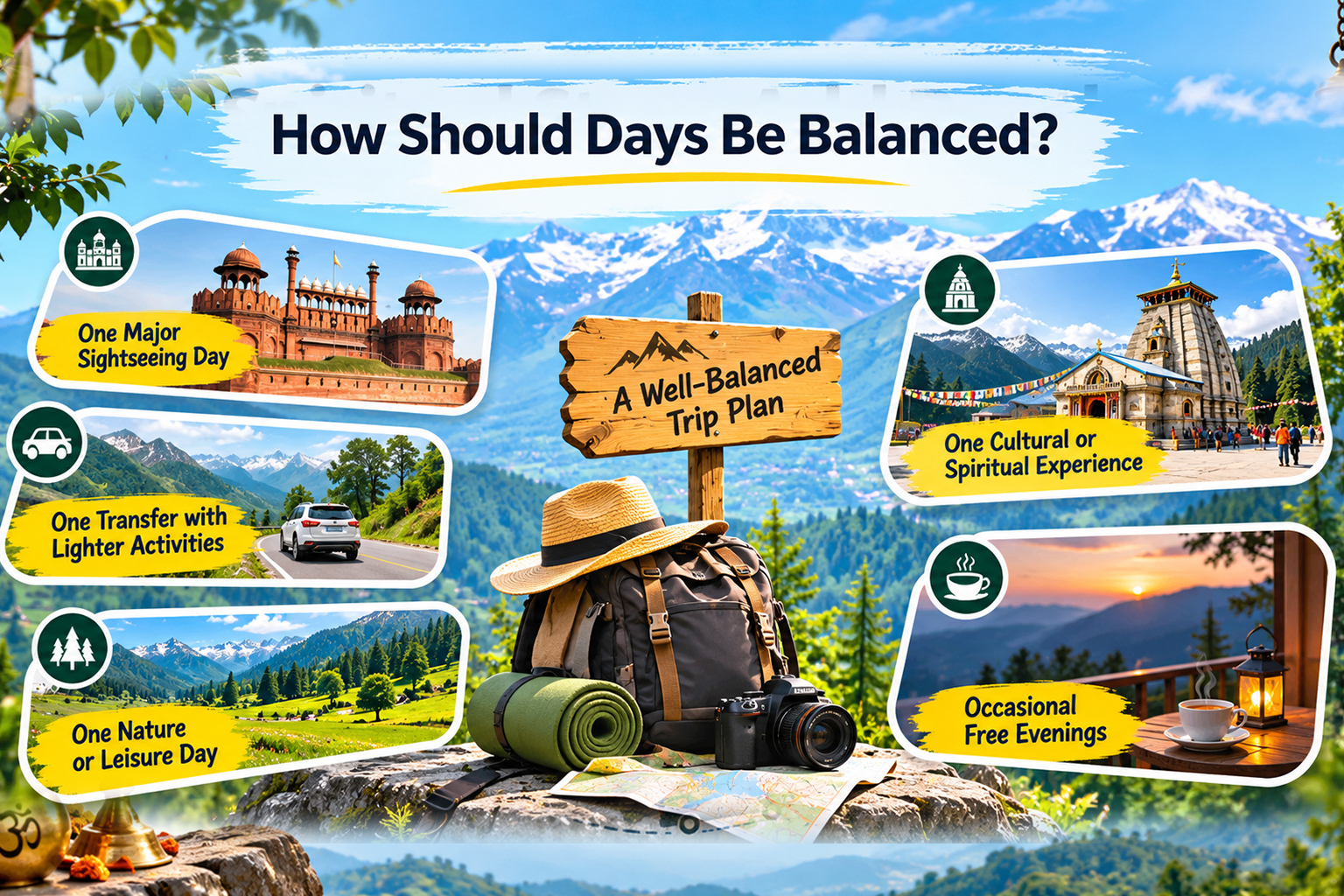
A practical rhythm may look like this:
- One major sightseeing day
- One transfer with lighter activities
- One nature or leisure day
- One cultural or spiritual experience
- Occasional free evenings
Families with children and older visitors usually benefit even more from this approach. A journey should feel full of experiences, but it should not feel like an endurance test.
Transport Connects Every Experience
A northern itinerary can involve private vehicles, trains, domestic flights, and sometimes short local transfers. Choosing the right option for each stretch is more important than sticking to one form of transport throughout the holiday.
Road travel works particularly well between destinations where the journey itself offers scenery or useful stops. Shimla to Manali, for example, can include views through Kullu Valley and areas around the Beas River. However, road distance in the hills should never be judged using the same assumptions as highway travel across flatter regions.
The published Delhi, Agra, Shimla, and Manali itinerary on the site estimates Delhi to Shimla at about eight hours and Shimla to Manali at roughly seven hours. Those times show why transfer days need realistic planning.
For very distant combinations, a train or flight may protect valuable holiday time. Someone combining Rajasthan with Uttarakhand, for example, may not want to spend several consecutive days driving when a quicker connection is available.
Transport also needs to match the traveller. Families may value door-to-door convenience, while couples may prefer a mix of scenic road journeys and faster connections.
A thoughtfully arranged Manali Shimla tour package should therefore consider not only what visitors see in each destination, but also how comfortably they move between them.
Local Experiences Create Variety
Major attractions may bring someone to North India, but smaller experiences often make the trip memorable. A carefully designed journey should leave room for local food, traditional markets, scenic walks, craft shopping, riverside time, and regional customs.
In Himachal Pradesh, that might mean an evening on Mall Road, visiting a local market, stopping in Kullu, or spending time near the Beas River. Around Dharamshala, Tibetan cultural influences add another dimension through monasteries and neighbourhoods around McLeod Ganj.
Uttarakhand offers an entirely different atmosphere. A boat ride in Nainital, walking beside the Ganges in Rishikesh, or watching an evening ceremony in Haridwar can break up longer sightseeing days.
These experiences work best when the itinerary is not packed down to every minute. It also explains why the same schedule should not be applied to every type of traveller. Adventure-focused visitors may want paragliding, rafting, or mountain excursions. Families may prefer viewpoints, shorter walks, temples, and comfortable leisure periods. Pilgrimage travellers may want more time at sacred sites.
This flexibility is what separates a useful itinerary from a simple destination list. Services such as accommodation planning, local transport, sightseeing arrangements, guides, and regional transfers can all be adjusted according to where they are actually needed.
The result is a journey with different textures rather than ten days of repeating the same routine.
Bringing the Journey Together
The best northern holidays don’t tend to be about one spectacular attraction. They work because each part contributes something different. Mountains make room and make views. Heritage cities offer history and architecture. Spiritual destinations are quieter; markets, food, local communities and scenic drives fill the gaps between the big sights. The elements are connected by a well-planned route which does not make travellers rush from one place to another. A well-assembled North India tour package is useful here: it provides enough structure to keep the transport and accommodation sorted, but still allows room for discovery.
At Star India Tours, our team plans journeys across North India with this balance in mind. Our existing routes include combinations covering Delhi, Agra, Jaipur, Shimla, Manali, Dharamshala, Dalhousie, Uttarakhand, and several spiritual destinations. We can bring accommodation, private transport, sightseeing, regional routes, and preferred experiences into one customised schedule based on available days and travel style. Rather than filling every hour, our approach is to shape a journey where culture, mountain scenery, and spiritual experiences each have enough space to feel worthwhile.
Frequently Asked Questions
Question: How many days are suitable for a varied North India holiday?
Answer: Around ten to fourteen days gives travellers more room to combine heritage cities with one or two mountain areas without spending every day in transit. Shorter journeys can still work well, but choosing fewer destinations usually creates a more comfortable schedule and leaves enough time for sightseeing and rest.
Question: What is the best season for visiting hill destinations?
Answer: The ideal period depends on the experience travellers want. Spring and early summer are popular for pleasant mountain weather, while winter attracts visitors interested in colder conditions and possible snowfall. Monsoon months may bring heavier rain, so road conditions and local weather should be considered before finalising routes.
Question: Can heritage cities and hill stations fit into one trip?
Answer: Yes. Delhi, Agra, or Jaipur can be combined with places such as Shimla or Manali when enough days are available. The main consideration is transfer time. Placing heritage sightseeing first and mountain stays later can also create a pleasant change of pace during the holiday.
Question: Are spiritual destinations suitable for non-pilgrims?
Answer: Yes. Places such as Rishikesh, Haridwar, Dharamshala, and many historic temples are also visited for culture, architecture, scenery, meditation, and local traditions. Visitors do not need to be travelling for religious reasons to appreciate these places, although respectful behaviour around sacred spaces is always important.
Question: Is private transport useful in mountain regions?
Answer: Private vehicles can make multi-stop hill journeys easier because they provide direct transfers and greater control over rest stops. However, travel times can still be long because of mountain roads, traffic, and weather. Daily plans should therefore be based on realistic driving hours rather than distance alone.