
 +91 92118 40803
 Buddhist Circuit Tour in India: Bodh Gaya to Sarnath
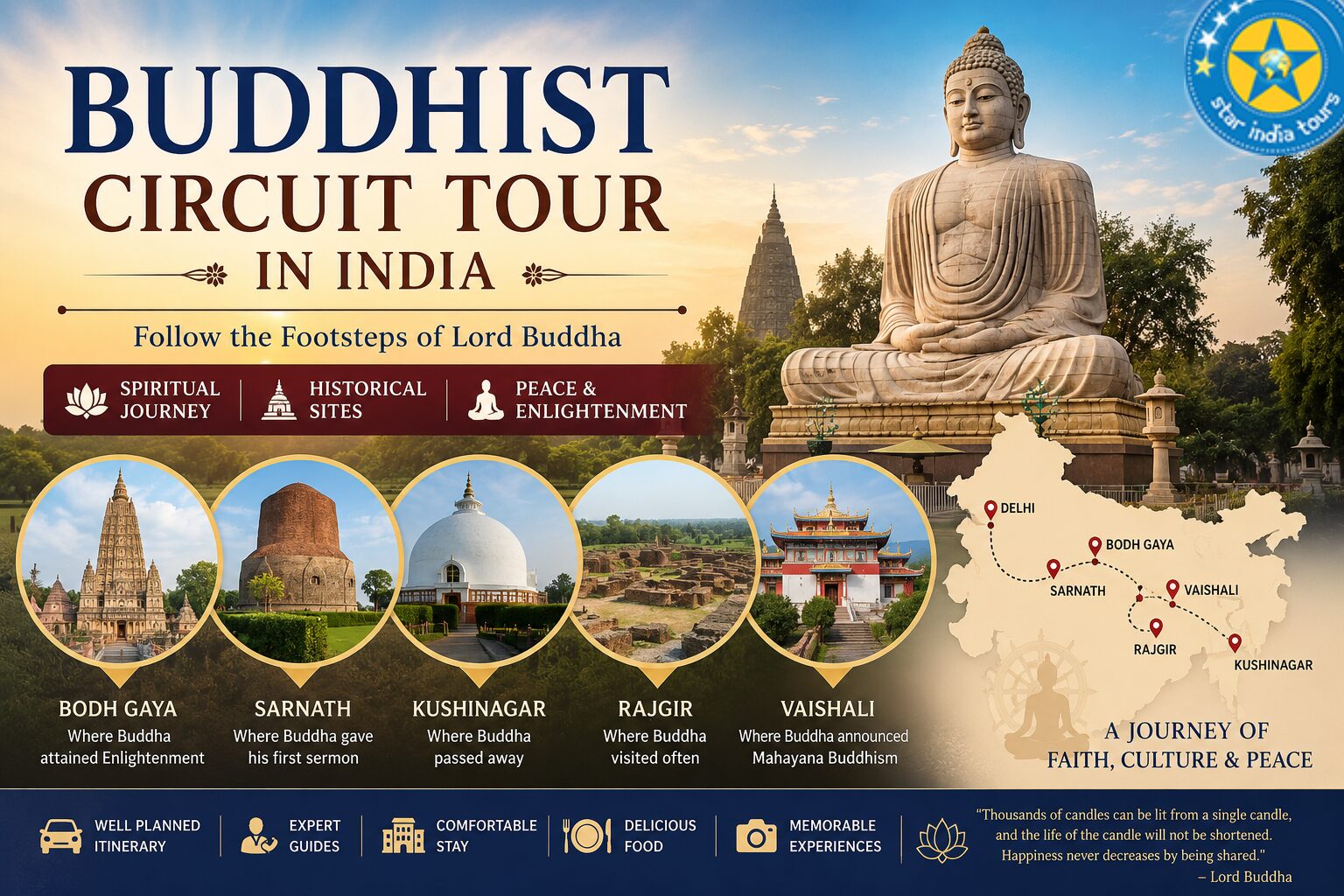
Some journeys are planned for sightseeing. This one is planned for meaning. The Buddhist Circuit between Bodh Gaya and Sarnath is one of the most important routes incudes in our Buddhist Circuit Tour Packages in India.It is not just a line on a map; it is a route that many travellers choose to feel closer to the places where key moments of the Buddha’s life and teachings are remembered. In this blog, we are going to study how to plan this circuit in a practical, comfortable way, while still keeping the experience thoughtful and unhurried.
From the stillness around the Mahabodhi Temple Complex at Bodh Gaya (a UNESCO World Heritage Site) to the calm of Sarnath, where the Buddha is traditionally believed to have given his first sermon, the journey has a quiet power. If you are comparing Buddhist circuit tour packages India or pairing it with a broader north India tour package, this guide will help you make choices that feel clear and realistic.
Why This Circuit Matters
The Buddhist Circuit is often described as spiritual, but it is also very grounded. It takes you through real towns and living pilgrimage spaces, not museum-like settings. That mix is what makes it special: you are not only reading history, you are walking through places people still visit with faith and curiosity.
Two locations frame this specific route beautifully:
- Bodh Gaya, associated with the Buddha’s enlightenment, and home to the Mahabodhi Temple Complex (UNESCO inscription: 2002).
- Sarnath, associated with the Buddha’s first teaching after enlightenment; it is known for landmarks such as the Dhamek Stupa and the Ashokan pillar tradition, with the Lion Capital linked to India’s state emblem.
For many travellers, this circuit also fits naturally into best north India tour packages, because Bihar and Uttar Pradesh connect well with other North Indian cultural routes. The key is to keep the trip focused: it should feel like a journey with a purpose, not a rushed checklist.
Beginning At Bodh Gaya
Bodh Gaya has a calm that you notice quickly, especially early in the morning. Even if you are not travelling for religious reasons, it is hard not to feel the atmosphere shift when you enter the Mahabodhi Temple Complex area. This is one of the most important Buddhist pilgrimage sites in the world, and it is directly associated with the Buddha’s enlightenment tradition.
A practical Bodh Gaya plan usually works best when you allow time for unstructured moments. People often underestimate how much they will want to simply sit, walk quietly, and absorb the place.
Here are a few ways travellers commonly use tour services in Bodh Gaya to make the visit smoother:
- Local assistance and timings guidance to avoid peak crowd windows
- Comfortable transfers between hotel, temple zone, and nearby sites
- A knowledgeable guide who can share context without overwhelming the day
If your goal is a calm and complete experience, this is where a mindful Buddhist pilgrimage route planning guide becomes useful, because small planning decisions (like time of visit and pacing) shape the overall feeling of the day.
Nalanda And Rajgir Insights
While the title centres on Bodh Gaya to Sarnath, many travellers add Nalanda and Rajgir because they deepen the story of Buddhism in India. They are often approached as “stops,” but they are more meaningful when treated as learning spaces.
Rajgir is widely associated with early Buddhist and Jain history, and travellers often appreciate it for its surrounding hills and reflective mood. Nalanda is remembered for its ancient monastic university tradition and the intellectual history connected to Buddhist studies. Even visitors who are not history specialists usually find that these places add context to what they felt in Bodh Gaya.
This portion of the circuit is also where itinerary design matters most. Distances can look short on paper, but road time, breaks, and comfort needs quickly add up.
A good travel plan here usually includes:
- an early start to keep the day relaxed
- planned rest stops (especially for families and senior travellers)
- a realistic balance between walking time and driving time
Travellers choosing Buddhist circuit tour packages India often benefit from an itinerary that includes these sites as optional layers, so the journey stays flexible instead of rigid.
Moving Toward Sarnath
Sarnath feels different from Bodh Gaya. Where Bodh Gaya is closely linked to the moment of awakening, Sarnath is closely linked to teaching, specifically the tradition of the Buddha’s first sermon after enlightenment. This is why many travellers describe Sarnath as gentle and reflective.
Two points often stand out for visitors:
- Dhamek Stupa, which marks the area traditionally associated with the first teaching.
- The legacy of the Ashokan pillar tradition; the Lion Capital is famously connected to India’s national emblem, making Sarnath relevant even beyond Buddhist history.
Because Sarnath is located near Varanasi, many itineraries combine both. This can be a very rewarding pairing, but it needs careful pacing. Varanasi can be intense and energetic, while Sarnath is quieter. The contrast is powerful when planned well, and exhausting when rushed.
If you are building a broader north India tour package, this is where you can make smart choices: keep Sarnath calm and unhurried, and plan Varanasi experiences with enough downtime.
What To Expect Each Day?
A Buddhist Circuit trip is not physically extreme, but it can be tiring if the itinerary is packed too tightly. Most days involve a mix of early mornings, road travel, walking at heritage or pilgrimage sites, and time in crowded areas.
A well-paced day often looks like this:
- Morning: one main site when energy is fresh
- Afternoon: one secondary stop, kept shorter
- Evening: rest time, light local exploration, or quiet reflection
It also helps to set expectations about what the “experience” will be. Much of the circuit’s value comes from small, human moments: hearing prayers in different languages, watching monks walk in silence, or simply sitting under a tree with time to think.
If your group has mixed interests (history lovers, spiritual travellers, casual tourists), the best itineraries allow each person to experience the place in their own way. That is why travellers often prefer customizable best north India tour packages for this route, because flexibility is not a luxury here, it is what keeps the journey comfortable.
Making The Trip Smooth
The Buddhist Circuit becomes far more enjoyable when logistics disappear into the background. This is where tour planning is not about “extras,” but about reducing friction, especially when travelling with elders, children, or international visitors.
Common services that are genuinely useful on this route include:
- Hotels chosen for location and comfort, not just price
- Reliable vehicles and drivers suited to long road days
- Local guides at key sites to provide context where it matters most
- Support with permits, entry flow, and timing, so days stay calm
- A realistic itinerary that avoids backtracking and unnecessary road hours
When people search for Buddhist circuit tour packages India, they often focus on how many places are included. In reality, the better question is: Will the trip feel peaceful or rushed? A thoughtful design, especially for an itinerary for Bodh Gaya and Sarnath Buddhist tour, keeps the circuit aligned with its true purpose.
Ending The Journey Thoughtfully
This route stays with people because it is not only about places, it is about what those places evoke. Bodh Gaya offers stillness and a sense of inward focus. Sarnath offers quiet clarity and the feeling of learning being shared. The best version of this circuit does not try to squeeze every site into a tight schedule. It gives the journey enough space to feel honest.
At Star India Tours, our team takes pride in shaping trips that feel natural and well-paced, so travellers exploring Buddhist circuit tour packages India or even curated best north India tour packages don’t just “see” these sacred places, they experience them in a way that feels real, comfortable, and lasting. Reach out to begin a circuit plan that respects your time, your pace, and the kind of experience you want to take home.
Ready to explore the sacred Buddhist destinations? Contact Star India Tours today to book your Buddhist Circuit Tour Package in India. Our travel experts will help you plan a customized itinerary, comfortable stay, and hassle-free journey.
Frequently Asked Questions
Question: How many days are ideal for a Bodh Gaya to Sarnath circuit?
Answer: A comfortable trip is usually 5 to 8 days, depending on whether you add places like Nalanda, Rajgir, or Varanasi and how relaxed you want the pacing to be.
Question: Is this circuit suitable for senior travellers?
Answer: Yes, it can be very suitable when planned with shorter walking blocks, comfortable vehicles, and rest breaks. Choosing hotels near key areas also reduces strain.
Question: Can this be combined with other North India destinations?
Answer: Yes. Many travellers combine it with Varanasi, Prayagraj, or other North India cultural stops, which is why it often fits well into a north India tour package without feeling disconnected.