
 +91 92118 40803
 Agra Fort: History, Facts & Travel Guide for Visitors
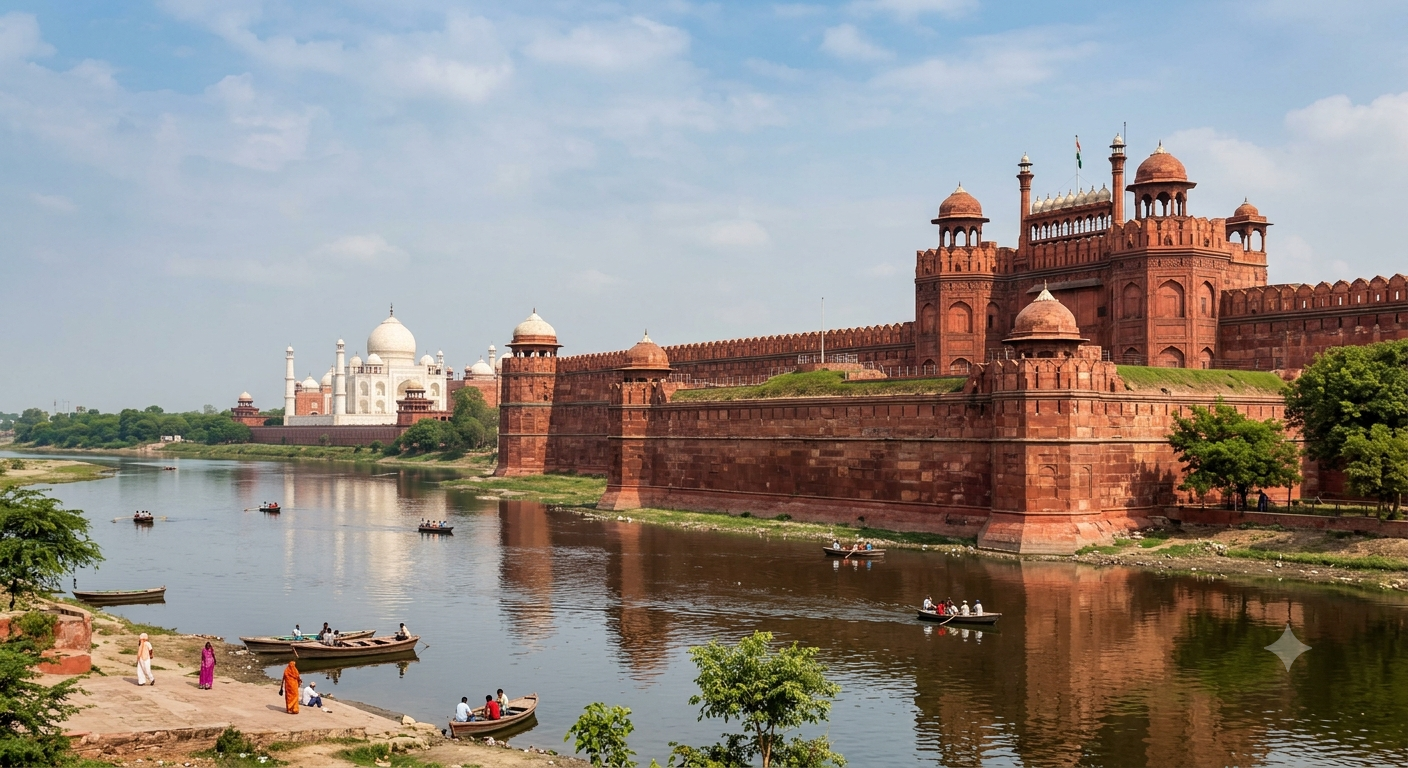
15 August के आसपास जब देशभर में आजादी और भारत की समृद्ध विरासत को महसूस करने का मौका मिलता है, तो एक heritage getaway आपके सफर को और खास बना सकता है। दिल्ली का Red Fort Independence Day celebrations के लिए मशहूर है, लेकिन अगर आप इतिहास, शाही वास्तुकला और यादगार travel experiences को करीब से देखना चाहते हैं, तो Agra Fort जरूर explore करें। Taj Mahal के साथ अपनी Agra trip में इस भव्य Mughal fort को शामिल करें और इसकी विशाल दीवारों, शाही महलों और सदियों पुरानी कहानियों के बीच भारत के गौरवशाली अतीत को महसूस करें।
As the 15 August 2026 draws near, India’s monuments become a natural preoccupation for many, for it was on this day that the country witnessed the end of the British rule. While Delhi’s Red Fort is the venue for the Independence Day celebrations, another fort in Agra is no less interesting as a treat for history-buff tourists who come to know about the country’s rich Mughal past.
Situated close to the Taj Mahal complex, the Agra fort is one of India’s largest and most sophisticated historical monuments. Surrounded by enormous red sandstone ramparts, it incorporates grandiose structures of palaces, audience halls, and mosques that were built at different times during the Mughal period. Additionally, in 1983, the Agra fort was inscribed on the UNESCO World Heritage list.
If you are planning an Agra Tour, adding Agra Fort to your itinerary is almost essential.
Where Is Agra Fort Located?
Agra fort is conveniently located in Agra, Uttar Pradesh near the Taj Mahal making it the ideal choice to include with day trips from the Taj Mahal to Agra.
Agra Fort’s extensive complex comprises with large number of Mughal palaces and mosques enclosed by 2.5 km long walls.
Agra Fort History
The present Agra Fort represents an important chapter in Mughal history. The powerful red sandstone fortress developed into an imperial city and became closely associated with Mughal rulers.
The complex contains palaces and halls connected with the Mughal period, including Jahangir Palace, Khas Mahal and Diwan-i-Khas. UNESCO describes the fort as an important 16th-century Mughal monument near the Taj Mahal.
Over time, the fort was transformed from a primarily military stronghold into a magnificent royal complex. Its architecture combines elements of defense with that of opulent palaces, courtyards, halls, and religious buildings.
Why is Agra Fort famous?
Agra Fort is famous for its impressive ramparts, as well as its magnificent Mughal buildings.
There are several reasons why it is well worth a visit:
- the splendid Mughal buildings,
- huge red sandstone fortifications,
- ancient royal palaces, among other things.
- Moreover, it is famous for its beautiful courtyards and audience halls,
- located near the Taj Mahal,
- UNESCO World Heritage Site
- unique history that spans several centuries.
Hence, these and many other factors contribute to the popularity of Agra Fort and its reputation as one of the most remarkable places to visit in Agra.
What Can You See in Agra Fort?
Jahangir Palace
Jahangir Palace is one of the most remarkable palace buildings inside the fort. It is part of the complex of buildings surrounding the Mughal ruler and his court.
Khas Mahal
The Khas Mahal is another fine example of Shah Jahan’s work. This building’s architectural development is entirely different from the rest of the fort, offering a stunning contrast to the more straightforward design of the fort’s massive walls.
Diwan-i-Khas
The Diwan-i-Khas or the private audience hall is where the Mughal emperor used to hold audiences and meetings. It is one of the most remarkable buildings in the complex.
Mughal Mosques
It is also worth visiting the mosques within the Agra Fort.
Agra Fort Architecture
Agra Fort’s architecture can be seen from the first glance at this complex. First, the most remarkable feature of Agra Fort is its red sandstone construction.
The large-scale fortification surrounding the complex was built to protect it, while the buildings inside represent the delicate Mughal architecture.Palaces, audience halls, courtyards and religious structures create a fascinating combination of military and royal design.
UNESCO notes that the fort’s approximately 2.5-kilometre enclosure contains the imperial city of the Mughal rulers.
Agra Fort and 15 August: What Makes This Time Special?
15 August, India’s Independence Day, is a particularly interesting time to explore the country’s historic monuments.
The Red Fort in Delhi has a direct association with the national Independence Day celebrations. Agra Fort, however, offers a different experience—one focused on India’s medieval and Mughal heritage.
For travelers planning a heritage-focused trip around Independence Day, Agra can be an excellent destination because a single itinerary can combine:
- Agra Fort
- Taj Mahal
- Mehtab Bagh
- Itmad-ud-Daulah
- Fatehpur Sikri
This makes an Agra Tour a great option for travelers who want to combine history, architecture and sightseeing during the August holiday period.
Travel tip: Independence Day can bring increased visitor interest and local security arrangements. Always check the latest official monument notice before visiting, especially for any holiday-specific entry restrictions or timing changes.
Best Places to Visit Near Agra Fort
Taj Mahal
The Taj Mahal is the obvious companion attraction to Agra Fort. Both monuments fall under the UNESCO World Heritage category, making them an essential destination for international tourists .
Mehtab Bagh
This garden complex located on the opposite bank of the Yamuna river is a favorite amongst those who wish to experience the beauty of the Taj Mahal as well as enjoy a more laid-back sightseeing adventure.
Itmad-ud-Daulah
A unique example of Mughal architecture, this attraction is also a great addition to any Agra-bound trip.
Fatehpur Sikri
This abandoned Mughal-era city is a great option for those with extra time on their hands.
Agra Fort Timings and Visitor Information
It is essential to check the most up-to-date information regarding visitor guidelines/ticket prices in advance. Particularly in regards to the 15 th of August, when specific instructions might be in place concerning visitor restrictions.
Instead of relying on out-dated information from travel guides, it is best to research the most recent protocols for the monument of Agra Fort before heading to the location.
Best Time To Visit Agra Fort – Weather & Crowd Management
As with any outdoor excursion, it is best to visit Agra Fort during the cooler seasons. Particularly if you plan on visiting during the August month, as the Independence Day weekend falls within the hotter season.
If traveling during the August holiday, it is best to plan extra time for sightseeing due to traffic and crowding.
Agra Tour Itinerary – How to Cover Agra’s Attractions In A Short Time
If you are looking to create a memorable trip full of Agra’s most famous sights, an organized Agra tour is the perfect way to see everything without rushing.
A sample day-by-day breakdown would look something like this:
Day 1 – Taj Mahal, Agra Fort, local tour
Day 2 – Fatehpur Sikri, Itimid-ud-daulah, Mehtab Bagh
In terms of a shorter excursion, those with a smaller window of availability can easily opt for the Taj Mahal and Agra Fort as a day tour. You may also plan to visit any other sights you find of interest within your timeframe.
Why Visit Agra Fort – Reasons to Add it to Your India Tour
While the Taj Mahal is most famous for its aesthetic appeal, an organized Agra Tour will also offer the chance at exploring a whole new side of India’s rich history and culture.
From royalty to religion and architecture to art, the Agra Fort has long been the center of Mughal history. It is a must-visit for anyone with a genuine interest in Indian heritage. Particularly for those hoping to explore the country’s Mughal legacy as well as historical monument sightseeing.
Plan Your Agra Trip With Star India Tours
With so many fascinating sights to see in and around Agra, a well-organized Agra tour will greatly benefit anyone hoping to make the most out of their visit. Whether it be sightseeing, accommodation, or transportation, an expertly devised Agra Tour Package will maximize your sightseeing potential.
If you are arriving in Agra at the end of August 2026 with Star India Tours, you should study the options for getting to the monument and reserve a vehicle in advance.
Final Thoughts
Agra Fort is not just a historical monument but a heritage site that offers splendid views of the bygone era of India’s glorious Mughal period. From the royal palace to the grand audience hall, Agra Fort displays every minute detail of the Mughal architecture and design. In anticipation of 15th August 2026, enthusiastic travelers can finalize their India tours with Agra fort and the Taj Mahal visits. Thus, for history enthusiasts, first-time visitors, as well as seasoned explorers, Agra Fort is an experience worth having in their lifetime with its UNESCO World Heritage status.
Frequently Asked Questions (FAQs)
1.What is Agra Fort famous for?
Agra Fort is famous for being an immense red sandstone fortress that encloses Mughal structures and palaces, including audience halls, and is a UNESCO World Heritage Site .
2.Is Agra Fort located near the Taj Mahal?
Agra Fort is a great tourist attraction, located near the Taj Mahal. Hence, it is recommended to plan an excursion to both monuments during the Agra tour..
3.When was Agra Fort declared a UNESCO World Heritage Site?
Agra Fort was declared a UNESCO World Heritage Site in 1983.
4.What can you see in Agra Fort?
One can see ancient monuments like the Jahangir Palace, the Khas Mahal, the Diwan-i-Khas, and mosques at the Agra Fort complex.
5.Are you wondering if it’s worth visiting the Agra Fort on 15 August?
You can enjoy your holiday season in Agra visiting this UNESCO World Heritage Site on 15th August, however, check and confirm with local authorities if there are any specific restrictions for exploring the monument on this day. As 15th August is India’s Independence Day, there may be certain limitations for tourists visiting the monument.