
 +91 92118 40803
 History of Andaman Cellular Jail
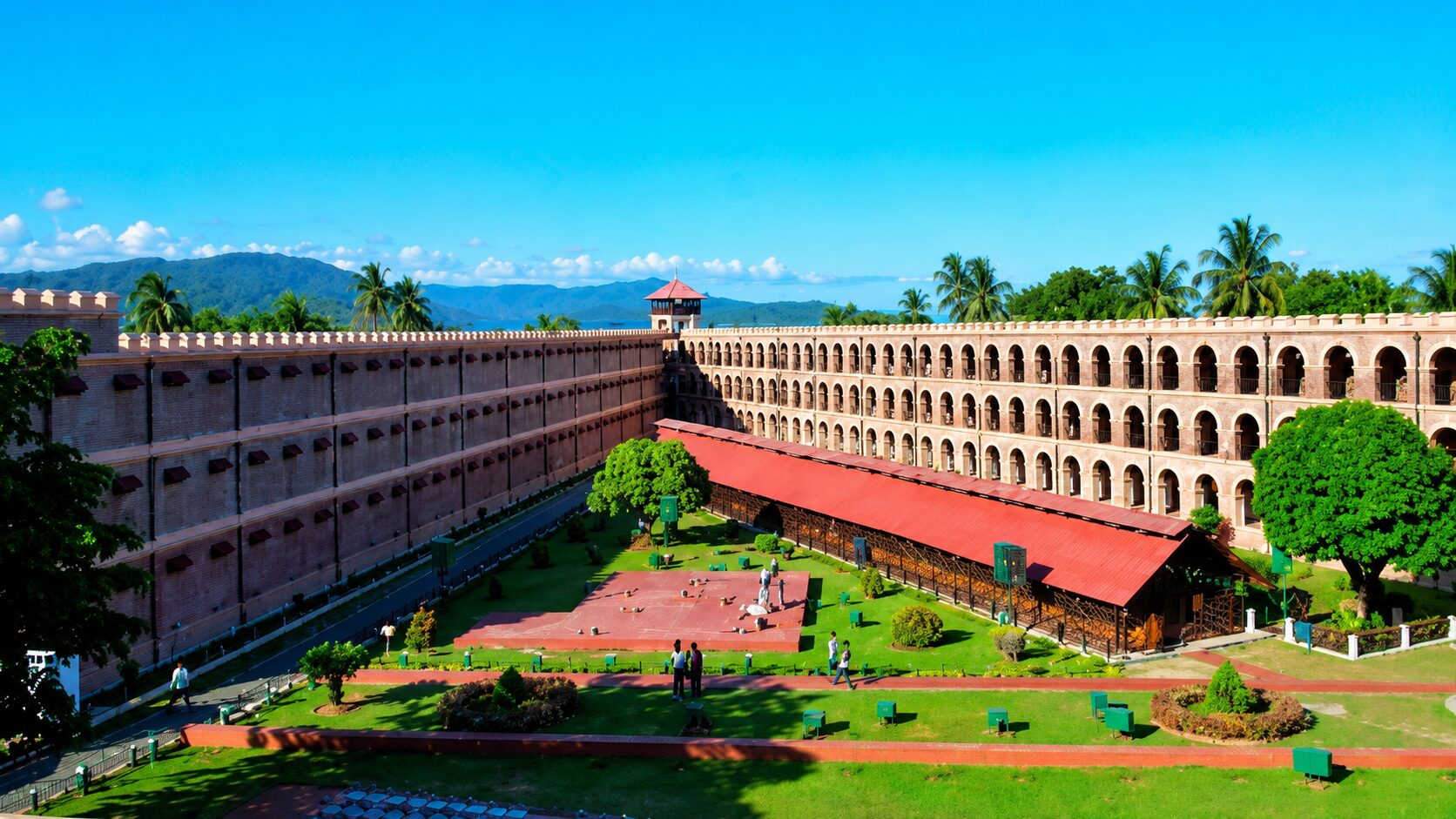
The history of Andaman Cellular Jail, popularly known as Kala Pani, stands as one of the most significant symbols of India’s struggle for independence. Located in Port Blair in the Andaman and Nicobar Islands, the jail was built by the British colonial government to isolate and punish political prisoners who fought against British rule.
Early History of the Andaman Islands & Cellular Jail
The Andaman Islands are a group of over 500 islands situated in the Bay of Bengal, approximately 1,100 kilometers from mainland India. The islands were originally inhabited by indigenous tribes and remained largely isolated from the rest of the world for centuries.
In 1789, Lieutenant Archibald Blair of the British East India Company established a settlement at Port Blair. However, due to disease and harsh living conditions, the settlement was abandoned in 1796.
The Revolt of 1857 and the Penal Settlement
Following the First War of Independence in 1857, the British sought a remote location to imprison revolutionaries and political prisoners. The Andaman Islands were chosen because of their isolation from the mainland.
In January 1858, the British re-established their presence in Port Blair. On 10 March 1858, the first batch of political prisoners arrived under the supervision of J. B. Walker. Thousands of freedom fighters were subsequently transported to the islands, where they endured harsh punishments, forced labour, and complete separation from their families.
Construction of the Cellular Jail
The increasing number of political prisoners led to the construction of the Cellular Jail in 1896. The building was completed in 1906 and consisted of seven wings radiating from a central tower, resembling the petals of a flower.
The jail contained 698 solitary cells designed to keep prisoners isolated from one another. This system prevented communication and collective resistance, making it one of the most feared prisons in British India.
Life Inside the Jail
Conditions inside the Cellular Jail were extremely harsh. Prisoners were forced to perform strenuous labour such as extracting oil from coconuts and mustard seeds, clearing forests, and constructing roads.
The cells measured approximately 13 by 6 feet and were poorly ventilated. Food was inadequate and often unfit for consumption. Physical punishment, solitary confinement, and flogging were common methods used by jail authorities to suppress resistance.
Freedom Fighters in the History of Andaman Cellular Jail
Many prominent revolutionaries were imprisoned in the Cellular Jail, including:
- Vinayak Damodar Savarkar (Veer Savarkar)
- Barindra Kumar Ghosh
- Ullaskar Dutta
- Batukeshwar Dutt
- Ganesh Ghosh
- Anant Singh
Many members of the Ghadar Movement, Anushilan Samiti, Hindustan Socialist Republican Association, and Chittagong Revolutionary Group were also imprisoned here.
Hunger Strikes and Resistance
Despite severe repression, prisoners continued to resist British authority. In 1933, political prisoners launched a historic hunger strike demanding better living conditions and recognition of their rights. During this protest, revolutionaries Mahavir Singh, Mohan Kishore Namadas, and Mohit Moitra lost their lives.
The nationwide outrage generated by the hunger strike forced the British administration to improve prison conditions. Prisoners were granted access to books, newspapers, educational activities, and limited opportunities for interaction.
A second major hunger strike in 1937 demanded the transfer of political prisoners back to mainland India. Supported by national leaders and public opinion, the movement succeeded, and many prisoners were eventually repatriated.
Netaji Subhas Chandra Bose and the Andamans
During World War II, the Andaman Islands came under Japanese control. On 30 December 1943, Subhas Chandra Bose visited Port Blair and hoisted the Indian national flag, symbolizing the aspiration for an independent India.
National Memorial
After India gained independence, parts of the Cellular Jail were demolished. Former freedom fighters and public activists strongly opposed its destruction, arguing that it should be preserved as a monument to the sacrifices made during the freedom struggle.
Today, the Cellular Jail stands as a National Memorial, attracting visitors from across India and the world. It serves as a reminder of the courage, suffering, and determination of the countless freedom fighters who endured imprisonment in the cause of India’s independence.
Conclusion
The history of Andaman Cellular Jail continues to inspire visitors and reninds people of the sacrifices made during India’s freedom struggle.The Cellular Jail remains one of the most powerful symbols of India’s freedom movement. Its walls bear witness to the sacrifices of thousands of revolutionaries who faced exile, torture, and isolation but never abandoned their dream of a free nation. Preserved as a National Memorial, the jail continues to inspire future generations with the story of India’s struggle for independence
Some Common Q&As
Q. Why is the Cellular Jail called Kala Pani?
A. The Cellular Jail was called Kala Pani because prisoners were exiled across the sea to the Andaman Islands, far from their families and homeland.
Q. When was the Cellular Jail built?
A. The Cellular Jail was constructed between 1896 and 1906 by the British government to house political prisoners in solitary confinement.
Q. Who was the most famous prisoner of the Cellular Jail?
A. Veer Savarkar is one of the most famous freedom fighters imprisoned in the Cellular Jail for his revolutionary activities against British rule.